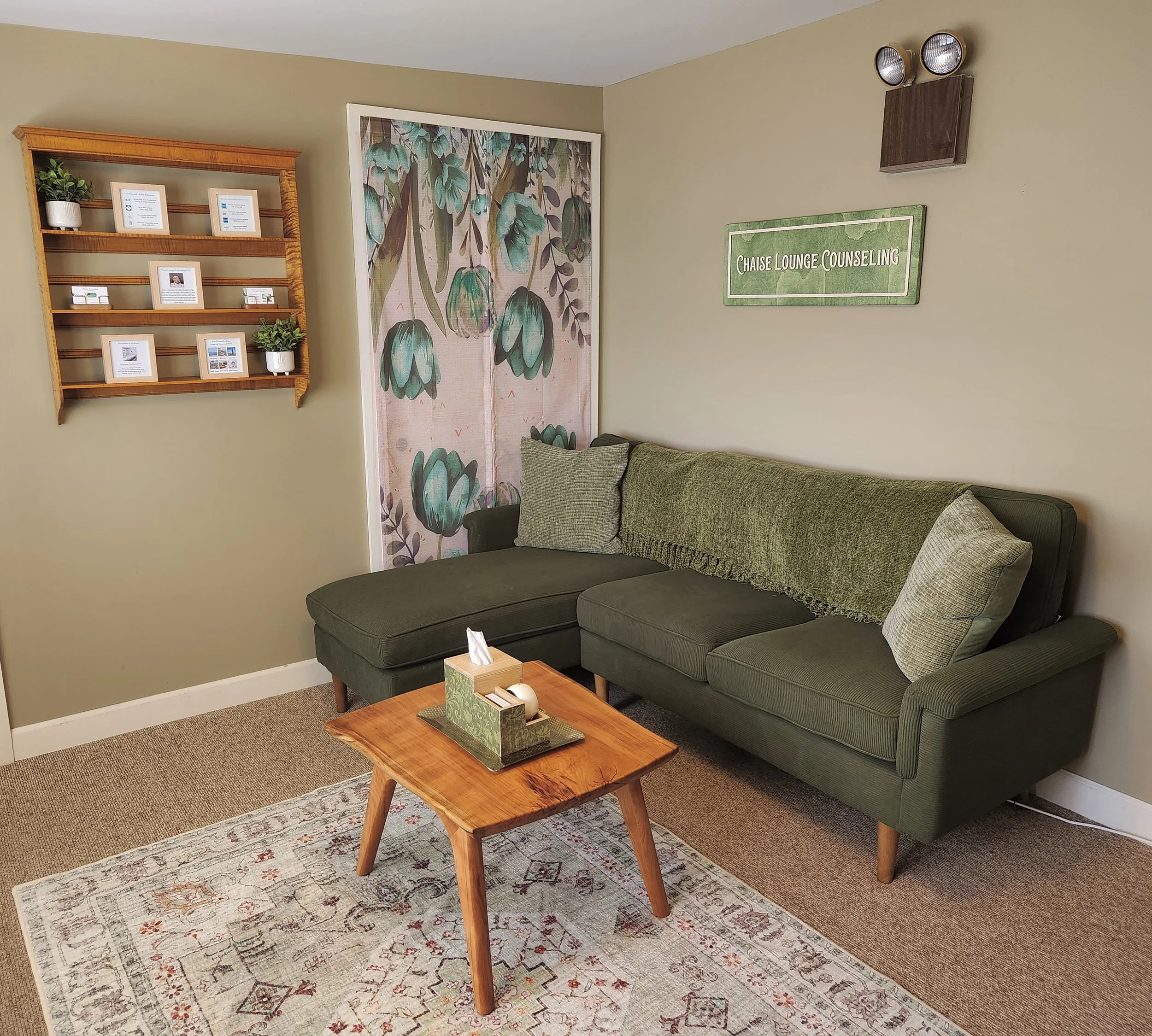
Chaise Lounge Counseling
Chaise Lounge Counseling offers personalized mental health therapy services designed to help individuals gain clarity, healing, and confidence in their daily lives. Through evidence-based therapy approaches and a calming, supportive environment, clients are guided in exploring their emotions, managing stress, strengthening coping skills, and navigating life’s challenges. Chaise Lounge Counseling is committed to creating a safe, welcoming space where every client feels heard, understood, and empowered on their path to physical and emotional wellness.
Services
-
Individual therapy is a safe, confidential space where you can explore your thoughts, emotions, and experiences with the support of a trained mental health professional.
Whether you’re navigating anxiety, depression, trauma, relationship challenges, life transitions, or ongoing stress, therapy offers personalized care tailored to your unique needs and goals.
Chaise Lounge Counseling integrates Cognitive Behavioral Therapy (CBT) and trauma-informed practices to help you better understand the connection between your thoughts, feelings, and behaviors.
-
Eye Movement Desensitization and Reprocessing (EMDR) is an evidence-based psychotherapy approach designed to help individuals heal from trauma and other distressing life experiences.
Originally developed by Francine Shapiro, EMDR is widely recognized as an effective treatment for post-traumatic stress, anxiety, and other trauma-related symptoms.
When we experience trauma, the brain’s natural ability to process information can become overwhelmed.
As a result, memories of distressing events may feel “stuck,” continuing to trigger strong emotional and physical reactions long after the event has passed.
EMDR therapy helps the brain reprocess these memories so they become less distressing and more adaptive.
-
Clinical supervision is a collaborative, supportive process designed to help therapists grow professionally, strengthen clinical skills, and provide ethical, effective care to their clients.
Whether you are a new clinician working toward licensure or an experienced professional seeking consultation, supervision offers a structured space for reflection, learning, and development.
Chaise Lounge Counseling provides a supportive environment where you can openly discuss cases, explore challenges, and build confidence in your clinical decision-making.
-
Chaise Lounge Counseling offers both in-person and secure telehealth therapy sessions to provide flexible, accessible care that fits your lifestyle and comfort level.
Whether you prefer meeting face-to-face in a private office setting or connecting from the convenience of your home, you will receive the same level of professional, compassionate, and confidential support.
-
Chaise Lounge Counseling provides individual therapy services for adolescents ages 13 and older, as well as adults.
Each stage of life brings unique challenges, and therapy offers a supportive space to navigate those experiences with guidance, skill-building, and compassion.
Clinicians

Shayna Provencher, LCSW
Insurances & Self-Pay
At Chaise Lounge Counseling, we understand that navigating insurance can be stressful. That’s why we gladly accept Aetna, Cigna, Medicare, Husky/Medicaid, United, and Anthem and are happy to help you check your insurance eligibility before scheduling your intake appointment. Our goal is to make starting therapy as easy and welcoming as possible.
We understand that insurance coverage doesn’t always fit everyone’s needs. That’s why we offer self-pay agreements for clients who are out-of-network or prefer to pay privately. We also provide sliding-scale fee assistance to help make counseling more accessible. Sliding-scale fees can be discussed directly with a clinician prior to scheduling your intake appointment.
Self-Pay Rates
Intake Appointment: $180
45 to 60 Minute Session: $150
30 Minute Session: $95
Specialties
-
Post-Traumatic Stress Disorder (PTSD) is a mental health condition that can develop after experiencing or witnessing a traumatic event. Trauma may include events such as accidents, abuse, assault, natural disasters, medical emergencies, military combat, or other situations where a person felt intense fear, helplessness, or danger.
While it is normal to experience stress reactions after a traumatic event, PTSD occurs when symptoms persist and begin to interfere with daily life, relationships, work, or school.
-
Parental trauma stemming from experiences of neglect or abandonment occurs when a parent’s own early life experiences impact how they relate to and find belonging in interpersonal relationships
Growing up without consistent care, emotional support, or reliable attachment can leave lasting effects, shaping how a person navigates relationships, trust, and their role as a parent.
Therapy provides a safe space to process unresolved childhood experiences and build healthier patterns in interpersonal relationships.
-
Generalized Anxiety Disorder (GAD) is a mental health condition characterized by persistent, excessive worry and tension that can interfere with daily life.
Unlike normal worry, which is often situational and temporary, GAD involves chronic anxiety about multiple areas—such as work, school, health, finances, or relationships—that is difficult to control.
-
Depression is a mental health condition that causes persistent feelings of sadness, low energy, and a loss of interest or pleasure in daily activities.
It goes beyond normal mood changes and can significantly affect relationships, work, school, and overall quality of life.
Therapy provides a safe and supportive space to explore the causes of depressive symptoms and develop practical strategies to manage them
-
Personality disorders are mental health conditions that involve long-lasting patterns of thinking, feeling, and behaving that can significantly impact relationships, work, and daily life.
These patterns often develop in adolescence or early adulthood and can make it challenging to respond flexibly to life’s demands or cope with stress.
Therapy provides a supportive space to understand these patterns, develop healthier coping strategies, and improve relationships and overall functioning.